Rohingya Citizenship a Burmese Decision: Suu Kyi to Foreign Critics | The Irrawaddy Magazine
THA LUN ZAUNG HTET/ THE IRRAWADDY, February 26, 2013
NAYPYIDAW—Opposition leader Aung San Suu Kyi has said that Burma “must decide for itself” whether or not to grant citizenship to the Muslim minority Rohingya, but she added that the government “should listen” to foreign experts and uphold international standards in its citizenship laws.
Suu Kyi was responding to criticism by Jose Ramos-Horta, the former president of Timor Leste, and Muhammad Yunus, founder of microfinance institution Grameen Bank in Bangladesh, who wrote in The Huffington Post on Feb. 20 that Burma should amend its laws and grant the Rohingya “full citizenship.”
The two Nobel Peace Prize laureates said Burma was failing to address the ongoing “ethnic cleansing” of the group in Arakan State, western Burma. Other international rights workers have previously also called on Burma to accept Rohingya citizenship.
A 1982 Citizenship Law, introduced by Burma’s military regime, excluded the Rohingya from the recognized 135 minorities in the country, rendering them effectively stateless.
When asked about the criticism in Naypyidaw on Friday, Suu Kyi said, “A country must decide its citizenship for itself, but in doing so it should meet international standards.”
“We should listen to and learn from what foreign scholars say,” she said of her fellow Nobel laureates. “And, finally, we have to make a decision by ourselves if what they say is appropriate in our country’s situation,” Suu Kyi told The Irrawaddy.
The government of President Thein Sein has given conflicting signals on how it seeks to resolve the issue of Rohingya citizenship. Most recently, on Feb. 20, Deputy Minister of Immigration and Population Kyaw Kyaw Win told Parliament that Burma knows “no Rohingya” ethnic group.
Since mid-2012 ethnic violence has plagued Arakan State. Scores of people, including women and children, have been killed and about 110,000 people, mostly Rohingyas, were displaced after inter-communal violence broke out between Arakanese Buddhist and Muslim Rohingya communities, according to UN estimates.
Local Arakanese authorities have been accused of being complicit in the violence against the Rohingya, who are referred to locally as “Bengali’s” from neighboring Bangladesh. Thousands of Rohingya have fled Arakan State in small boats since violence flared.
The UN High Commissioner for Refugees (UNHCR) Antonio Guterres has repeatedly expressed deep concern over the plight of those who flee on boats into the Bay of Bengal. The UN said about 13,000 Rohingya fled western Burma and Bangladesh in 2012, and an estimated 500 refugees died at sea.
In recent weeks there have been almost daily reports of Rohingya’s being picked up on boats in the open ocean.
On Tuesday, Guterres again called for governments in the Asia Pacific region to work together to end the humanitarian tragedy taking place in the Bay of Bengal.
“This is an alarmingly high number of lives lost, and begs a far more concerted effort by countries of the region both with regard to addressing the causes and to preventing lives being lost,” he said.
“Push-backs, denial of disembarkation, and boats adrift for weeks will not solve a regional problem that clearly needs better, more joined-up, and more compassionate approaches by everyone,” Guterres said
The commissioner referred to some of the approaches taken by regional governments such as Thailand, which, on occasion, has pushed back boats of Rohingya into the open ocean.
The UNHCR said it plans to facilitate a regional government meeting in mid-March in Indonesia on irregular movements by sea in the Asia-Pacific, in order to address the Rohingya refugee crisis.
Additional reporting by Paul Vrieze.
Wednesday, February 27, 2013


Friday, February 22, 2013
In Burma, Answers to Ethnic Conflict Elusive | The Irrawaddy Magazine
In Burma, Answers to Ethnic Conflict Elusive | The Irrawaddy Magazine
TODD PITMAN / AP WRITER, February 22, 2013
LAWA YANG, Kachin State — Kneeling beside a line of freshly dug trenches carved like one long, open wound into a lush hillside, the rebel sergeant peered through dusty binoculars at all his troops had lost.
Scattered across the sprawling valley below, a dozen thatched-roof homes stood quiet, abandoned by fleeing villagers as government forces drew near. Towering above: four forested mountain ridges seized by Burma’s army after some of the bloodiest clashes here in decades—so fierce the ethnic Kachin guerrillas who survived said the artillery fire came down like rain.
If the Kachin Independence Army (KIA), the last armed insurgent group still at war in Burma, loses just one more mountain ridge, there will be little to stop government forces from taking their stronghold on the Chinese border. They are ill-equipped—some rebels wear helmets made only of hardened plastic and admit running low on ammunition—but they remain defiant.
“We’re very vulnerable because the army now holds the high ground,” rebel Sgt. Brang Shawng said as he scanned the new front line at Lawa Yang, where his unit retreated last month.
But he added: “We will never give up. For us, this is a fight for self-determination, and I’ll keep fighting for it until I die.”
Government soldiers, bolstered for the first time by screeching fighter jets and helicopter gunships that pounded the hills for weeks, advanced late last month to within just a few kilometers of the rebel headquarters town of Laiza, the closest they have ever come.
The region has been relatively calm since, but even so, the dramatic upsurge in fighting underscores how far Burma is from achieving one of the things it needs most—a political settlement to end not just the war with the Kachin, but decades-long conflicts with more than a dozen other rebel armies that have plagued the country for decades and still threaten its future.
Much is at stake for this Southeast Asian nation, which has stunned the world by opening politically and economically over the last two years following five decades of military rule. President Thein Sein’s government rose to power in 2011 following elections that rights groups said were neither free nor fair, but it has since ushered in reforms, freed political prisoners and allowed opposition leader Aung San Suu Kyi and her supporters to be elected to Parliament.
Still, Burma has yet to resolve a multitude of conflicts with its ethnic minorities, which make up about 40 percent of the population. Their persistent push for political autonomy has turned vast patchworks of territory along the borders with China and Thailand into rebel fiefdoms rich in jade, timber, gold and opium.
In Kachin State alone, the control of which is split between rebels and the government, resource-hungry China has invested billions of dollars in hydroelectric dams. A Chinese-backed pipeline project is due to begin pumping oil and gas from the Bay of Bengal in May, and more development projects are planned, including highways and railways that would link Indian Ocean seaports with the rest of Southeast Asia. Most of them cross rebel zones.
Thein Sein’s administration has signed truce deals with 18 armed groups—everyone except the Kachin, according to Min Zaw Oo, who heads cease-fire negotiations at the Myanmar Peace Center, a government-appointed body that is coordinating peace talks.
Most of those truces had already been negotiated with the former junta, but the nation’s former military rulers “never accepted the need for a political settlement,” Min Zaw Oo said.
Thein Sein’s administration, by contrast, realizes a cease-fire alone is not sufficient, he said. “This government sees dialogue as key. It is ready to talk. That’s a major policy distinction.”
Min Zaw Oo said he believes Burma has the best chance in 60 years of ending the country’s ethnic conflicts. But he acknowledged that “practically, there are a lot of obstacles in the way.”
Distrust runs deep, and even the truces remain fragile. The army and rebels in eastern Shan State, for example, have clashed at least 44 times since agreeing a cease-fire last year, Min Zaw Oo said.
In Kachin State, there has been speculation the government was trying to strengthen its hand at negotiations by escalating the war to new heights with airstrikes. But rebel Col. Zaw Taung, director of strategic analysis for the KIA, said the skirmishes only pushed the two sides further apart.
“They say they want peace, but they just threw everything they have against us,” he said. “With one hand they’re trying to burn us, with the other, they’re trying douse us with water. They cannot be trusted.”
The army, like the rebels, insists it fought only in self-defense.
On Wednesday, government envoys resumed talks in the Thai city of Chiang Mai with the United Nationalities Federal Council, an alliance of 11 ethnic militias, including the Kachin, that banded together last year. Few expected any breakthroughs, and no cease-fire was reached with the Kachin, which have met the government more than a dozen times since war in the north reignited in 2011.
The talks are “only about the framework of future discussions,” said Hkun Okkar, a senior alliance member. “We’re demanding a political dialogue, and the government agrees, but real dialogue hasn’t started.”
Last week, Thein Sein acknowledged that his country’s history of ethnic conflict has been a major barrier to progress, and that achieving stability is crucial as it pursues a democratic future.
His words, though, were delivered on an occasion infused with bitter irony: Union Day, which commemorates the 1947 deal between Suu Kyi’s father, independence hero Gen Aung San, and ethnic leaders to break away from Britain’s colonial arms together.
The so-called Panglong Agreement also granted ethnic minorities autonomy, but it fell apart after the assassination of Aung San.
The Kachin, who are predominantly Christian in a majority Buddhist country, first took up arms in 1961. A 1994 truce with the army lasted 17 years, but during that time, rebel demands for rights and a federalist system were never addressed.
Instead, the junta in 2008 forced through a new constitution. The nation’s minorities say it places enormous power in the hands of the central government and the military, which rights groups say has orchestrated a campaign of discrimination, forced labor and abuse against the Kachin and other groups for decades. The constitution can be amended only with approval of the armed forces, which even now control 25 percent of Parliament.
Tensions rose further in 2009, when the junta tried to persuade ethnic armies to join a new border guard force. Most, including the Kachin, refused.
Two months after Thein Sein took office in 2011, the Kachin truce finally broke down when the army bolstered its presence near a hydropower plant in Dapein that is a joint venture with a Chinese company, and rebels refused to abandon a strategic base nearby.
Since then, more than 100,000 Kachin civilians have been displaced, and the rebels have progressively lost territory, pressed closer and closer against the Chinese border.
Only one major mountain ridge now separates Laiza from Burma’s army, and a grim mood has settled over the town.
At the main cemetery, workers are erecting concrete tombstones for rebels who died in the latest fighting. At least 23 are buried here under mounds of red dirt, though rebel officials declined to say how many were killed altogether.
Every night, a single-file candlelight peace vigil organized by a Catholic priest snakes through Laiza’s darkened and nearly deserted streets. Shops are closed. Displaced people crowd camps perched on a rocky river that marks the border with China.
The rebels, clearly outgunned, say they will not even try to retake lost ground. There is talk of the rebels abandoning Laiza if need be, of shifting their headquarters to a secret location if the army makes a push for the town. Most of their offices on a hillside overlooking town already appear empty, and the rebels’ most senior leadership is no longer here.
“For a guerrilla army, what matters most is not holding ground, but maintaining the support of the people,” Zaw Taung said, speaking at a Laiza hotel the rebels use as an office that is decorated with wall-to-wall maps.
Judging by comments from many Kachin, across many levels of society, they overwhelmingly support the rebels, whom they see as protectors and their legitimate government, perhaps now more than ever.
Asked why the rebels were the only armed group that has yet to sign a truce with the government, Zaw Taung was dismissive.
“We tried that for 17 years. What did it get us?” he asked. “The only thing that will end the war is a political solution. Without that, a truce means nothing. The fighting will go on.”
TODD PITMAN / AP WRITER, February 22, 2013
LAWA YANG, Kachin State — Kneeling beside a line of freshly dug trenches carved like one long, open wound into a lush hillside, the rebel sergeant peered through dusty binoculars at all his troops had lost.
Scattered across the sprawling valley below, a dozen thatched-roof homes stood quiet, abandoned by fleeing villagers as government forces drew near. Towering above: four forested mountain ridges seized by Burma’s army after some of the bloodiest clashes here in decades—so fierce the ethnic Kachin guerrillas who survived said the artillery fire came down like rain.
If the Kachin Independence Army (KIA), the last armed insurgent group still at war in Burma, loses just one more mountain ridge, there will be little to stop government forces from taking their stronghold on the Chinese border. They are ill-equipped—some rebels wear helmets made only of hardened plastic and admit running low on ammunition—but they remain defiant.
“We’re very vulnerable because the army now holds the high ground,” rebel Sgt. Brang Shawng said as he scanned the new front line at Lawa Yang, where his unit retreated last month.
But he added: “We will never give up. For us, this is a fight for self-determination, and I’ll keep fighting for it until I die.”
Government soldiers, bolstered for the first time by screeching fighter jets and helicopter gunships that pounded the hills for weeks, advanced late last month to within just a few kilometers of the rebel headquarters town of Laiza, the closest they have ever come.
The region has been relatively calm since, but even so, the dramatic upsurge in fighting underscores how far Burma is from achieving one of the things it needs most—a political settlement to end not just the war with the Kachin, but decades-long conflicts with more than a dozen other rebel armies that have plagued the country for decades and still threaten its future.
Much is at stake for this Southeast Asian nation, which has stunned the world by opening politically and economically over the last two years following five decades of military rule. President Thein Sein’s government rose to power in 2011 following elections that rights groups said were neither free nor fair, but it has since ushered in reforms, freed political prisoners and allowed opposition leader Aung San Suu Kyi and her supporters to be elected to Parliament.
Still, Burma has yet to resolve a multitude of conflicts with its ethnic minorities, which make up about 40 percent of the population. Their persistent push for political autonomy has turned vast patchworks of territory along the borders with China and Thailand into rebel fiefdoms rich in jade, timber, gold and opium.
In Kachin State alone, the control of which is split between rebels and the government, resource-hungry China has invested billions of dollars in hydroelectric dams. A Chinese-backed pipeline project is due to begin pumping oil and gas from the Bay of Bengal in May, and more development projects are planned, including highways and railways that would link Indian Ocean seaports with the rest of Southeast Asia. Most of them cross rebel zones.
Thein Sein’s administration has signed truce deals with 18 armed groups—everyone except the Kachin, according to Min Zaw Oo, who heads cease-fire negotiations at the Myanmar Peace Center, a government-appointed body that is coordinating peace talks.
Most of those truces had already been negotiated with the former junta, but the nation’s former military rulers “never accepted the need for a political settlement,” Min Zaw Oo said.
Thein Sein’s administration, by contrast, realizes a cease-fire alone is not sufficient, he said. “This government sees dialogue as key. It is ready to talk. That’s a major policy distinction.”
Min Zaw Oo said he believes Burma has the best chance in 60 years of ending the country’s ethnic conflicts. But he acknowledged that “practically, there are a lot of obstacles in the way.”
Distrust runs deep, and even the truces remain fragile. The army and rebels in eastern Shan State, for example, have clashed at least 44 times since agreeing a cease-fire last year, Min Zaw Oo said.
In Kachin State, there has been speculation the government was trying to strengthen its hand at negotiations by escalating the war to new heights with airstrikes. But rebel Col. Zaw Taung, director of strategic analysis for the KIA, said the skirmishes only pushed the two sides further apart.
“They say they want peace, but they just threw everything they have against us,” he said. “With one hand they’re trying to burn us, with the other, they’re trying douse us with water. They cannot be trusted.”
The army, like the rebels, insists it fought only in self-defense.
On Wednesday, government envoys resumed talks in the Thai city of Chiang Mai with the United Nationalities Federal Council, an alliance of 11 ethnic militias, including the Kachin, that banded together last year. Few expected any breakthroughs, and no cease-fire was reached with the Kachin, which have met the government more than a dozen times since war in the north reignited in 2011.
The talks are “only about the framework of future discussions,” said Hkun Okkar, a senior alliance member. “We’re demanding a political dialogue, and the government agrees, but real dialogue hasn’t started.”
Last week, Thein Sein acknowledged that his country’s history of ethnic conflict has been a major barrier to progress, and that achieving stability is crucial as it pursues a democratic future.
His words, though, were delivered on an occasion infused with bitter irony: Union Day, which commemorates the 1947 deal between Suu Kyi’s father, independence hero Gen Aung San, and ethnic leaders to break away from Britain’s colonial arms together.
The so-called Panglong Agreement also granted ethnic minorities autonomy, but it fell apart after the assassination of Aung San.
The Kachin, who are predominantly Christian in a majority Buddhist country, first took up arms in 1961. A 1994 truce with the army lasted 17 years, but during that time, rebel demands for rights and a federalist system were never addressed.
Instead, the junta in 2008 forced through a new constitution. The nation’s minorities say it places enormous power in the hands of the central government and the military, which rights groups say has orchestrated a campaign of discrimination, forced labor and abuse against the Kachin and other groups for decades. The constitution can be amended only with approval of the armed forces, which even now control 25 percent of Parliament.
Tensions rose further in 2009, when the junta tried to persuade ethnic armies to join a new border guard force. Most, including the Kachin, refused.
Two months after Thein Sein took office in 2011, the Kachin truce finally broke down when the army bolstered its presence near a hydropower plant in Dapein that is a joint venture with a Chinese company, and rebels refused to abandon a strategic base nearby.
Since then, more than 100,000 Kachin civilians have been displaced, and the rebels have progressively lost territory, pressed closer and closer against the Chinese border.
Only one major mountain ridge now separates Laiza from Burma’s army, and a grim mood has settled over the town.
At the main cemetery, workers are erecting concrete tombstones for rebels who died in the latest fighting. At least 23 are buried here under mounds of red dirt, though rebel officials declined to say how many were killed altogether.
Every night, a single-file candlelight peace vigil organized by a Catholic priest snakes through Laiza’s darkened and nearly deserted streets. Shops are closed. Displaced people crowd camps perched on a rocky river that marks the border with China.
The rebels, clearly outgunned, say they will not even try to retake lost ground. There is talk of the rebels abandoning Laiza if need be, of shifting their headquarters to a secret location if the army makes a push for the town. Most of their offices on a hillside overlooking town already appear empty, and the rebels’ most senior leadership is no longer here.
“For a guerrilla army, what matters most is not holding ground, but maintaining the support of the people,” Zaw Taung said, speaking at a Laiza hotel the rebels use as an office that is decorated with wall-to-wall maps.
Judging by comments from many Kachin, across many levels of society, they overwhelmingly support the rebels, whom they see as protectors and their legitimate government, perhaps now more than ever.
Asked why the rebels were the only armed group that has yet to sign a truce with the government, Zaw Taung was dismissive.
“We tried that for 17 years. What did it get us?” he asked. “The only thing that will end the war is a political solution. Without that, a truce means nothing. The fighting will go on.”
Thursday, February 21, 2013
Thailand Losing out to China in Battle of the Burma Ports | The Irrawaddy Magazine
Thailand Losing out to China in Battle of the Burma Ports | The Irrawaddy Magazine
WILLIAM BOOT / THE IRRAWADDY, February 21, 2013
Thailand’s dream of acquiring a trade gateway to the Indian Ocean may be scuppered not because of lukewarm interest by Japanese investors but because of Burmese and Chinese business interests.
The Bangkok government has blamed problems in securing Japanese investment for the latest delay in forging ahead with the Dawei industrial port project on Burma’s southeast coast. In fact, the grandiose multi-billion dollar scheme first envisaged by the private Thai developer Italian-Thai Development (ITD) as long ago as 2008 was in limbo long before the Thai government moved in last September to try to help it along.
The Burmese government had clearly gone cold on Dawei—which is closer to Bangkok than Rangoon by 300 km—when it refused to approve a huge 4,000 megawatt coal-fueled electricity generating plant at the site for ITD back in February 2012.
By then, Chinese government money was already building an oil transhipment terminal on the central coast at Kyaukphyu, another sleepy Burmese seaside town where gas from the Shwe field out in the Bay of Bengal will also come ashore.
Kyaukphyu is where oil and natural gas pipelines now being completed through Burma into China’s neighboring Yunnan Province begin. It’s where China plans to take a fast railway line from Yunnan carrying exports, and it’s where the Burmese government on the back of these developments has ambitions to build an economic zone to attract manufacturers and create a major import-export port with thousands of jobs.
Kyaukphyu is not close to Rangoon but it is only 250 km to Naypyidaw and less to the central Irrawaddy belt of towns leading up to Mandalay.
“The fundamental problem with the Dawei project is that its main beneficiary is always going to be Bangkok,” regional energy industries analyst-consultant Collin Reynolds told The Irrawaddy on Feb. 19. “The Thais want it primarily as a crude oil transhipment point much the same as the Chinese are achieving with their Kyaukphyu set up.
“Thailand also sees Dawei as a place where it could expand its petrochemicals industry, which is stymied on the edge of Bangkok because of environmental and health concerns.
“Japanese investment could go into Dawei in support of this because Japanese firms are among those that have been restricted at Bangkok’s Map Ta Phut petrochemicals industrial estate. But I think Japan sees bigger prospects in and around the port in Rangoon where some of its large industrial corporations have committed to a new economic zone.”
Whereas the Naypyidaw government has had no direct input on Dawei—beyond polite meetings with Thai government delegations led by Prime Minister Yingluck Shinawatra—it has already appointed a minister, Myint Thein, to oversee a development agency for Kyaukphyu.
Naypyidaw has signed an agreement with China to permit a combined railway and highway which would link Kyaukphyu with towns in central Burma and especially Yunnan’s provincial capital Kunming.
No timetable for the 1,200-km-long railway’s construction has been announced, but the natural gas pipeline controlled by China National Petroleum Corporation is being tested this month and is scheduled to begin commercial operations in April, while the parallel oil pipeline should be completed by the end of this year.
Kyaukphyu is ideally placed for an expected growth in Burma’s offshore oil and gas exploitation. There are 20 or more untouched blocks dotted along the coast both sides of Kyaukphyu which are likely to go up for auction sometime this year.
“The Kyaukphyu Economic Zone is a specially designated area in which foreign companies will construct and operate petrochemical plants and oversee the export of Chinese-made products,” says Arakan Oil Watch, an NGO concerned about environmental and human rights issues such as land confiscation.
The NGO said a special economic zone law was established by the former military junta in January 2011 and is still in force, regulating investor privileges, land use, finance management and labor.
The Naypyidaw government has said it will consult local people, something that hasn’t happened at other major development sites, before finalizing industrial zoning at Kyaukphyu.
Thailand’s Transport Minister Chadchat Sittipunt, who chairs the Thai-Myanmar Joint Coordination Committee for Dawei, said on Feb. 12 there were serious problems preventing the Dawei project proceeding. It could be another whole year before Japan made a firm commitment, he said.
“Thailand’s Office of Transport and Traffic Policy and Planning has said it will have to conduct a new feasibility study on several aspects of the project as Japan disagrees on [ITD’s] planning of the location of the port and infrastructure details,” said Hong Kong’s Inside Investor, which provides advice to business investors across Asia.
If Dawei does finally return to its sleepy seaside status, the Thais can still secure their gateway to the Indian Ocean and, like the Chinese, avoid using the Malacca Strait for oil shipments. The Thai Ministry of Transport is carrying out yet another feasibility study into a so-called land bridge across Thailand’s narrowest point.
It’s not as handy for Bangkok as Dawei, but Pakbara in southern Thailand near the Malaysian island of Langkawi on the Andaman Sea is only 100 km across to the Gulf of Thailand at Mueang Songkhla, short enough to build oil pipelines for transhipment.
WILLIAM BOOT / THE IRRAWADDY, February 21, 2013
Thailand’s dream of acquiring a trade gateway to the Indian Ocean may be scuppered not because of lukewarm interest by Japanese investors but because of Burmese and Chinese business interests.
The Bangkok government has blamed problems in securing Japanese investment for the latest delay in forging ahead with the Dawei industrial port project on Burma’s southeast coast. In fact, the grandiose multi-billion dollar scheme first envisaged by the private Thai developer Italian-Thai Development (ITD) as long ago as 2008 was in limbo long before the Thai government moved in last September to try to help it along.
The Burmese government had clearly gone cold on Dawei—which is closer to Bangkok than Rangoon by 300 km—when it refused to approve a huge 4,000 megawatt coal-fueled electricity generating plant at the site for ITD back in February 2012.
By then, Chinese government money was already building an oil transhipment terminal on the central coast at Kyaukphyu, another sleepy Burmese seaside town where gas from the Shwe field out in the Bay of Bengal will also come ashore.
Kyaukphyu is where oil and natural gas pipelines now being completed through Burma into China’s neighboring Yunnan Province begin. It’s where China plans to take a fast railway line from Yunnan carrying exports, and it’s where the Burmese government on the back of these developments has ambitions to build an economic zone to attract manufacturers and create a major import-export port with thousands of jobs.
Kyaukphyu is not close to Rangoon but it is only 250 km to Naypyidaw and less to the central Irrawaddy belt of towns leading up to Mandalay.
“The fundamental problem with the Dawei project is that its main beneficiary is always going to be Bangkok,” regional energy industries analyst-consultant Collin Reynolds told The Irrawaddy on Feb. 19. “The Thais want it primarily as a crude oil transhipment point much the same as the Chinese are achieving with their Kyaukphyu set up.
“Thailand also sees Dawei as a place where it could expand its petrochemicals industry, which is stymied on the edge of Bangkok because of environmental and health concerns.
“Japanese investment could go into Dawei in support of this because Japanese firms are among those that have been restricted at Bangkok’s Map Ta Phut petrochemicals industrial estate. But I think Japan sees bigger prospects in and around the port in Rangoon where some of its large industrial corporations have committed to a new economic zone.”
Whereas the Naypyidaw government has had no direct input on Dawei—beyond polite meetings with Thai government delegations led by Prime Minister Yingluck Shinawatra—it has already appointed a minister, Myint Thein, to oversee a development agency for Kyaukphyu.
Naypyidaw has signed an agreement with China to permit a combined railway and highway which would link Kyaukphyu with towns in central Burma and especially Yunnan’s provincial capital Kunming.
No timetable for the 1,200-km-long railway’s construction has been announced, but the natural gas pipeline controlled by China National Petroleum Corporation is being tested this month and is scheduled to begin commercial operations in April, while the parallel oil pipeline should be completed by the end of this year.
Kyaukphyu is ideally placed for an expected growth in Burma’s offshore oil and gas exploitation. There are 20 or more untouched blocks dotted along the coast both sides of Kyaukphyu which are likely to go up for auction sometime this year.
“The Kyaukphyu Economic Zone is a specially designated area in which foreign companies will construct and operate petrochemical plants and oversee the export of Chinese-made products,” says Arakan Oil Watch, an NGO concerned about environmental and human rights issues such as land confiscation.
The NGO said a special economic zone law was established by the former military junta in January 2011 and is still in force, regulating investor privileges, land use, finance management and labor.
The Naypyidaw government has said it will consult local people, something that hasn’t happened at other major development sites, before finalizing industrial zoning at Kyaukphyu.
Thailand’s Transport Minister Chadchat Sittipunt, who chairs the Thai-Myanmar Joint Coordination Committee for Dawei, said on Feb. 12 there were serious problems preventing the Dawei project proceeding. It could be another whole year before Japan made a firm commitment, he said.
“Thailand’s Office of Transport and Traffic Policy and Planning has said it will have to conduct a new feasibility study on several aspects of the project as Japan disagrees on [ITD’s] planning of the location of the port and infrastructure details,” said Hong Kong’s Inside Investor, which provides advice to business investors across Asia.
If Dawei does finally return to its sleepy seaside status, the Thais can still secure their gateway to the Indian Ocean and, like the Chinese, avoid using the Malacca Strait for oil shipments. The Thai Ministry of Transport is carrying out yet another feasibility study into a so-called land bridge across Thailand’s narrowest point.
It’s not as handy for Bangkok as Dawei, but Pakbara in southern Thailand near the Malaysian island of Langkawi on the Andaman Sea is only 100 km across to the Gulf of Thailand at Mueang Songkhla, short enough to build oil pipelines for transhipment.
Saturday, February 16, 2013
Heirs of Sultan of Sulu pursue Sabah claim on their own | Philippine Daily Inquirer
Heirs of Sultan of Sulu pursue Sabah claim on their own | Philippine Daily Inquirer
Arlyn dela Cruz, Philippine Daily Inquirer, February 16th, 2013
Feeling betrayed and left out in the peace process between the government and the Moro Islamic Liberation Front (MILF), the heirs of the Sultan of Sulu have decided to press their claim to the eastern Malaysian state of Sabah on their own.
Crown Prince Rajah Mudah Agbimuddin Kiram said in an interview with the Inquirer that the government appeared to have neglected the heirs and ignored their stand that their claim to Sabah was an “integral and essential” aspect of any peace agreement with any armed group in Mindanao.
Abraham Julpa Idjirani, secretary general and spokesperson of the Sultanate of Sulu, said the decision to show not just physical presence but actual occupation of Sabah came late last year, shortly after the Aquino administration signed a Framework Agreement on the Bangsamoro with the MILF.
The standoff continued yesterday with Rajah Mudah’s claim to be under the protection of the security forces of the Sultanate of Sulu adding more mystery to the bizarre border drama.
Departure on Feb. 11
“They are not interested, this government and the previous governments, so we decided to act on our own,” Rajah Mudah said.
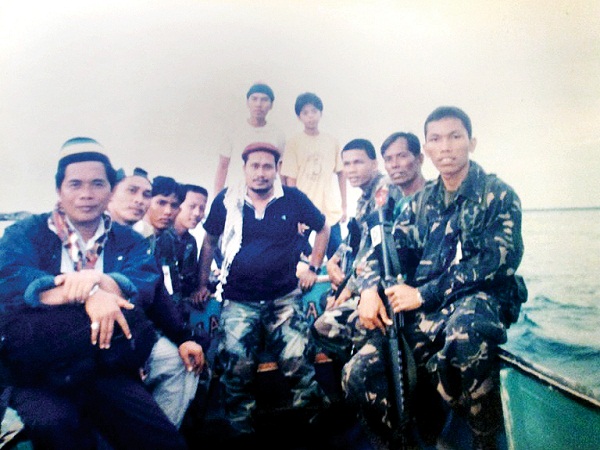
Early on Feb. 11, Rajah Mudah and about 1,000 of his followers, including armed men from what he called “Royal Security Forces of the Sultanate of Sulu and North Borneo” left Simunul Island in Tawi-Tawi in speedboats and headed for Sabah.
Rajah Mudah described his action as not an act of aggression but a journey back home.
“We came here in peace. We are not here to wage war. The armed men who are with me are the Royal Security Forces of the Sultanate of Sulu and North Borneo. We will never bring war to our own territory, much less to our own people,” Rajah Mudah said.
His group landed in the village of Tunduao in Lahad Datu town in Sabah.
Surrounded
What happened after the landing is unclear, but reports from Kuala Lumpur on Thursday said Malaysian security forces had surrounded the Filipinos, whom they believed were a faction of Muslim rebels unhappy with a peace deal with the administration of President Aquino.
Rajah Mudah said he and his group were not arrested. He said he was communicating with Gen. Zul Kipli, head of the Special Branch of Sabah, the equivalent of the top intelligence officer in the Philippines.
He admitted, however, that he and his group were surrounded by Malaysian police and special forces.
The standoff between the Malaysian authorities and Rajah Mudah’s group has sparked one of the biggest security scares in recent years in Sabah, which is less than an hour by speedboat from the southernmost Philippine province of Tawi-Tawi.
To ascertain facts
Malacañang was reluctant to meddle in the reported incursion into Sabah by “100 armed Filipinos” claiming to be descendants of the Sultan of Sulu.
Deputy presidential spokesperson Abigail Valte indicated in a briefing for reporters in the Palace yesterday that the government was not sure about what was going on in Sabah.
She said the Philippine Embassy in Kuala Lumpur had sent a police attaché to Sabah to ascertain “what’s really happening.”
Valte said the government would provide assistance “to any Filipino abroad,” but added that on the Sabah standoff, “we would like to ascertain the facts first.”
Unaware of the situation in Lahad Datu, Philippine officials said the Filipinos were unarmed civilians who had been promised land.
Citing information from Defense Secretary Voltaire Gazmin, Valte told reporters yesterday that the Filipinos were unarmed.
But Rajah Mudah’s claim that he was surrounded by his own security forces indicated the dearth of information in the government about the move taken by the heirs of the Sultan of Sulu.
Negotiations
In a statement released yesterday, the Department of Foreign Affairs said Malaysian Foreign Minister Anifa Aman had spoken to Foreign SecretaryAlbert del Rosario and assured him that the Malaysians would respect the rights of the Filipinos in the Sabah standoff.
The statement said the Malaysian government had resorted to “negotiations to encourage” the Filipinos “to leave peacefully.”
Both the Philippine military and the Malaysian military had established that the Filipinos’ activity in Sabah had no approval from the Philippine government, the DFA said.
“In this regard, we therefore urge these concerned individuals to return to their homes and families,” the DFA said.
Pretended consultation
Idjirani said that before the signing of the agreement, the Office of the Presidential Adviser on the Peace Process (Opapp) invited the heirs of the Sultan of Sulu to what was supposed to be a consultation on a peace deal with the MILF.
He said he was asked to give a lecture on the stand of the Sultanate of Sulu at a forum held at the University of the Philippines College of Law.
“We thought finally the government of President Aquino wanted a complete and comprehensive resolution management to the peace, security and economic problems of territories in Mindanao by consulting with us. But it was just talk,”
Idjirani said in English and Filipino.
“The framework agreement was finished without even the shadow of the Sultanate of Sulu and North Borneo. They just pretended to consult us,” he said.
He said the government encouraged the heirs of the Sultan of Sulu to lead “peace caravans” and they complied. He showed pictures of such a caravan taken in Tawi-Tawi last year. The pictures showed members of the Kiram royal family and their followers participating in the caravan.
Sultanate not mentioned
But the next thing the heirs knew, he said, the framework agreement had been signed without any mention of the “historic and sovereign rights” of the Sultanate of Sulu and North Borneo to territories included in the agreement.
“Until the government includes the Sultanate of Sulu and North Borneo, no lasting and significant peace will come to Mindanao,” Idjirani said.
“They should have seen that in the failure of the peace agreement with the Moro National Liberation Front of Nur Misuari,” he said.
“We thought the administration of President Aquino gave weight to ancestral and historic agreements. We were clearly wrong,” he added.
He said the sultanate’s “desire and intention” to be part of the peace process initiated by the government was expressed in a letter to former President Gloria Macapagal-Arroyo dated April 13, 2009.
In that letter signed by Sultan Jamalul Kiram III, he said, the government was acknowledged and referred to only as an ally in the sultanate’s ancestral and historic rights over the Sulu archipelago, which includes territories covered in the preliminary peace talks between the government and the MILF.
But Arroyo’s term ended in June 2010 with no agreement being reached with the MILF.
It was the Aquino administration that would clinch a preliminary peace deal with the MILF.
Heirs united
Idjirani said the signing of the framework agreement with the MILF led to the unification of the heirs of the Sultan of Sulu and their decision to proceed with claiming Sabah on their own.
Idjirani said the reported differences among the heirs were never personal but involved only policy and direction.
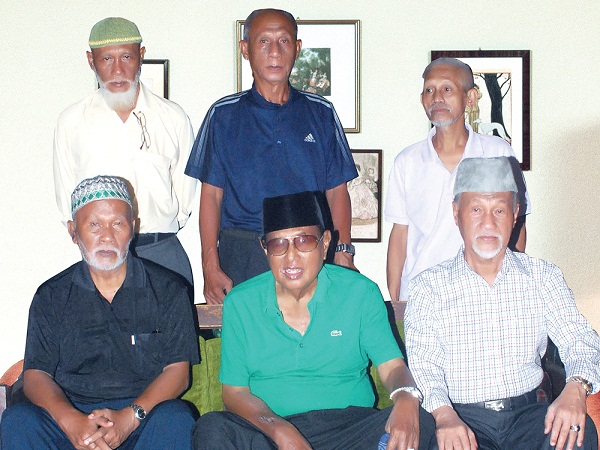
He said the direct descendants and heirs of the Sultan of Sulu and North Borneo were Sultan Jamalul Kiram III, Sultan Bantilan Esmail Kiram III, Datu Alianapia Kiram, Datu Phugdal Kiram, Datu Baduruddin Kiram and Rajah Mudah Agbimuddin Kiram, the crown prince who was tasked to lead the 1,000-strong civilian and military force to Sabah.
The “meeting of the minds” of the Kirams happened on Nov. 11 last year in a relative’s house, Idjirani said. It was during that meeting that Sultan Jamalul issued the royal decree that authorized Rajah Mudah’s journey to Sabah.
With reports from Michael Lim Ubac, Jerome Aning, AFP and The Star-Asia News Network
Arlyn dela Cruz, Philippine Daily Inquirer, February 16th, 2013
Feeling betrayed and left out in the peace process between the government and the Moro Islamic Liberation Front (MILF), the heirs of the Sultan of Sulu have decided to press their claim to the eastern Malaysian state of Sabah on their own.
Crown Prince Rajah Mudah Agbimuddin Kiram said in an interview with the Inquirer that the government appeared to have neglected the heirs and ignored their stand that their claim to Sabah was an “integral and essential” aspect of any peace agreement with any armed group in Mindanao.
Abraham Julpa Idjirani, secretary general and spokesperson of the Sultanate of Sulu, said the decision to show not just physical presence but actual occupation of Sabah came late last year, shortly after the Aquino administration signed a Framework Agreement on the Bangsamoro with the MILF.
The standoff continued yesterday with Rajah Mudah’s claim to be under the protection of the security forces of the Sultanate of Sulu adding more mystery to the bizarre border drama.
Departure on Feb. 11
“They are not interested, this government and the previous governments, so we decided to act on our own,” Rajah Mudah said.
Early on Feb. 11, Rajah Mudah and about 1,000 of his followers, including armed men from what he called “Royal Security Forces of the Sultanate of Sulu and North Borneo” left Simunul Island in Tawi-Tawi in speedboats and headed for Sabah.
Rajah Mudah described his action as not an act of aggression but a journey back home.
“We came here in peace. We are not here to wage war. The armed men who are with me are the Royal Security Forces of the Sultanate of Sulu and North Borneo. We will never bring war to our own territory, much less to our own people,” Rajah Mudah said.
His group landed in the village of Tunduao in Lahad Datu town in Sabah.
Surrounded
What happened after the landing is unclear, but reports from Kuala Lumpur on Thursday said Malaysian security forces had surrounded the Filipinos, whom they believed were a faction of Muslim rebels unhappy with a peace deal with the administration of President Aquino.
Rajah Mudah said he and his group were not arrested. He said he was communicating with Gen. Zul Kipli, head of the Special Branch of Sabah, the equivalent of the top intelligence officer in the Philippines.
He admitted, however, that he and his group were surrounded by Malaysian police and special forces.
The standoff between the Malaysian authorities and Rajah Mudah’s group has sparked one of the biggest security scares in recent years in Sabah, which is less than an hour by speedboat from the southernmost Philippine province of Tawi-Tawi.
To ascertain facts
Malacañang was reluctant to meddle in the reported incursion into Sabah by “100 armed Filipinos” claiming to be descendants of the Sultan of Sulu.
Deputy presidential spokesperson Abigail Valte indicated in a briefing for reporters in the Palace yesterday that the government was not sure about what was going on in Sabah.
She said the Philippine Embassy in Kuala Lumpur had sent a police attaché to Sabah to ascertain “what’s really happening.”
Valte said the government would provide assistance “to any Filipino abroad,” but added that on the Sabah standoff, “we would like to ascertain the facts first.”
Unaware of the situation in Lahad Datu, Philippine officials said the Filipinos were unarmed civilians who had been promised land.
Citing information from Defense Secretary Voltaire Gazmin, Valte told reporters yesterday that the Filipinos were unarmed.
But Rajah Mudah’s claim that he was surrounded by his own security forces indicated the dearth of information in the government about the move taken by the heirs of the Sultan of Sulu.
Negotiations
In a statement released yesterday, the Department of Foreign Affairs said Malaysian Foreign Minister Anifa Aman had spoken to Foreign SecretaryAlbert del Rosario and assured him that the Malaysians would respect the rights of the Filipinos in the Sabah standoff.
The statement said the Malaysian government had resorted to “negotiations to encourage” the Filipinos “to leave peacefully.”
Both the Philippine military and the Malaysian military had established that the Filipinos’ activity in Sabah had no approval from the Philippine government, the DFA said.
“In this regard, we therefore urge these concerned individuals to return to their homes and families,” the DFA said.
Pretended consultation
Idjirani said that before the signing of the agreement, the Office of the Presidential Adviser on the Peace Process (Opapp) invited the heirs of the Sultan of Sulu to what was supposed to be a consultation on a peace deal with the MILF.
He said he was asked to give a lecture on the stand of the Sultanate of Sulu at a forum held at the University of the Philippines College of Law.
“We thought finally the government of President Aquino wanted a complete and comprehensive resolution management to the peace, security and economic problems of territories in Mindanao by consulting with us. But it was just talk,”
Idjirani said in English and Filipino.
“The framework agreement was finished without even the shadow of the Sultanate of Sulu and North Borneo. They just pretended to consult us,” he said.
He said the government encouraged the heirs of the Sultan of Sulu to lead “peace caravans” and they complied. He showed pictures of such a caravan taken in Tawi-Tawi last year. The pictures showed members of the Kiram royal family and their followers participating in the caravan.
Sultanate not mentioned
But the next thing the heirs knew, he said, the framework agreement had been signed without any mention of the “historic and sovereign rights” of the Sultanate of Sulu and North Borneo to territories included in the agreement.
“Until the government includes the Sultanate of Sulu and North Borneo, no lasting and significant peace will come to Mindanao,” Idjirani said.
“They should have seen that in the failure of the peace agreement with the Moro National Liberation Front of Nur Misuari,” he said.
“We thought the administration of President Aquino gave weight to ancestral and historic agreements. We were clearly wrong,” he added.
He said the sultanate’s “desire and intention” to be part of the peace process initiated by the government was expressed in a letter to former President Gloria Macapagal-Arroyo dated April 13, 2009.
In that letter signed by Sultan Jamalul Kiram III, he said, the government was acknowledged and referred to only as an ally in the sultanate’s ancestral and historic rights over the Sulu archipelago, which includes territories covered in the preliminary peace talks between the government and the MILF.
But Arroyo’s term ended in June 2010 with no agreement being reached with the MILF.
It was the Aquino administration that would clinch a preliminary peace deal with the MILF.
Heirs united
Idjirani said the signing of the framework agreement with the MILF led to the unification of the heirs of the Sultan of Sulu and their decision to proceed with claiming Sabah on their own.
Idjirani said the reported differences among the heirs were never personal but involved only policy and direction.
He said the direct descendants and heirs of the Sultan of Sulu and North Borneo were Sultan Jamalul Kiram III, Sultan Bantilan Esmail Kiram III, Datu Alianapia Kiram, Datu Phugdal Kiram, Datu Baduruddin Kiram and Rajah Mudah Agbimuddin Kiram, the crown prince who was tasked to lead the 1,000-strong civilian and military force to Sabah.
The “meeting of the minds” of the Kirams happened on Nov. 11 last year in a relative’s house, Idjirani said. It was during that meeting that Sultan Jamalul issued the royal decree that authorized Rajah Mudah’s journey to Sabah.
With reports from Michael Lim Ubac, Jerome Aning, AFP and The Star-Asia News Network
PH calls for peaceful solution to Sabah stand-off | Inquirer Global Nation
PH calls for peaceful solution to Sabah stand-off | Inquirer Global Nation
Agence France-Presse, February 16th, 2013
LAHAD DATU, Malaysia—The Philippines on Saturday called for a peaceful resolution to a tense stand-off between Malaysian forces and a group of gunmen claiming to be followers of the heir of a former Borneo sultan.
The group, estimated at 200 with dozens believed to be armed, landed by boat near the Borneo town of Lahad Datu in Sabah from the neighboring southern Philippines on Tuesday.
Police say the group has declared itself followers of a former Mindanao-based Islamic sultanate that once controlled parts of Borneo, including the standoff site, and is refusing to leave Sabah.
President Benigno Aquino’s spokeswoman Abigail Valte said Saturday the safety of the Filipinos was the government’s main concern as Malaysian armed forces and police have locked down the area.
“The primary concern now is their safety and to resolve the incident peacefully,” Valte said in a radio interview in Manila.
She said the Philippines had received assurance from Malaysia that the government would encourage the group, which Manila has yet to identify, to leave the area peacefully.
Sabah police chief Hamza Taib was quoted by local dailies as saying police were in negotiations with the group and expected the stand-off to be resolved “very soon with the group returning to their home country.”
Malaysian police have set up a series of road blocks along the route leading from Lahad Datu through palm oil plantations to the remote village where the gunmen are. Marine police were also patrolling the sea.
An Agence France-Presse photographer was denied access some 20 kilometers (12 miles) from the stand-off site.
The group involved in the impasse has claimed to be adherents of the former Sulu sultanate, a regional power center until its demise a century ago.
A Philippine military official, who spoke on condition of anonymity, told AFP Friday the group was demanding an increase in the nominal amount Malaysia pays, under a long-standing agreement, to the heirs of the sultanate for possession of Sabah.
Much of the eastern part of Sabah is being claimed by the Philippines as part of the Sultanate of Sulu that was leased to the British North Borneo Company in 1878. However, Great Britain instead of returning Sabah to the sultanate transferred it to Malaysia in 1963.
Malaysia continues to pay “cession money” to the heirs of the sultan of Sulu. With INQUIRER.net
Agence France-Presse, February 16th, 2013
LAHAD DATU, Malaysia—The Philippines on Saturday called for a peaceful resolution to a tense stand-off between Malaysian forces and a group of gunmen claiming to be followers of the heir of a former Borneo sultan.
The group, estimated at 200 with dozens believed to be armed, landed by boat near the Borneo town of Lahad Datu in Sabah from the neighboring southern Philippines on Tuesday.
Police say the group has declared itself followers of a former Mindanao-based Islamic sultanate that once controlled parts of Borneo, including the standoff site, and is refusing to leave Sabah.
President Benigno Aquino’s spokeswoman Abigail Valte said Saturday the safety of the Filipinos was the government’s main concern as Malaysian armed forces and police have locked down the area.
“The primary concern now is their safety and to resolve the incident peacefully,” Valte said in a radio interview in Manila.
She said the Philippines had received assurance from Malaysia that the government would encourage the group, which Manila has yet to identify, to leave the area peacefully.
Sabah police chief Hamza Taib was quoted by local dailies as saying police were in negotiations with the group and expected the stand-off to be resolved “very soon with the group returning to their home country.”
Malaysian police have set up a series of road blocks along the route leading from Lahad Datu through palm oil plantations to the remote village where the gunmen are. Marine police were also patrolling the sea.
An Agence France-Presse photographer was denied access some 20 kilometers (12 miles) from the stand-off site.
The group involved in the impasse has claimed to be adherents of the former Sulu sultanate, a regional power center until its demise a century ago.
A Philippine military official, who spoke on condition of anonymity, told AFP Friday the group was demanding an increase in the nominal amount Malaysia pays, under a long-standing agreement, to the heirs of the sultanate for possession of Sabah.
Much of the eastern part of Sabah is being claimed by the Philippines as part of the Sultanate of Sulu that was leased to the British North Borneo Company in 1878. However, Great Britain instead of returning Sabah to the sultanate transferred it to Malaysia in 1963.
Malaysia continues to pay “cession money” to the heirs of the sultan of Sulu. With INQUIRER.net
Friday, February 15, 2013
Burma President hails national unity, avoiding autonomy status | Asia News – Politics, Media, Education | Asian Correspondent
Burma President hails national unity, avoiding autonomy status | Asia News – Politics, Media, Education | Asian Correspondent
Zin Linn, Feb 14, 2013

Zin Linn, Feb 14, 2013
President U Thein Sein received responsible persons of peace groups who attended the 66th Anniversary Union Day celebration on Wednesday at the meeting hall of 500-acre farmer educative mechanized farming model plantation in Naypyitaw, The New Lightof Myanmar said Thursday.
Apart from Union ministers, and deputy ministers, several unusual guests were also presented at the ceremony. Those unexpected participants from ethnic ceasefire groups were Pado Mahn Nyein Maung and Pado Thamein Tun of Karen National Union (KNU), Col Sai Hla and Col Sai Ngae of the Restoration Council of Shan State/Shan State Army (RCSS/SSA), U Sai Khun Sai and U Sai Naw Leik of Shan State Progress Party/ Shan State Army (SSPP/SSA), Maj-Gen Saw Yin Nu and Captain Saw Lah Do of Karen National Libration Army, Peace Council (KNU/ KNLA), U Khun Ti Hsaung and U Khun Zwe Hto of PaO National Liberation Organization (PNLO), U Naing Ta La Nyi and U Naing Kyi Hsan of New Mon State Party (NMSP), Dr Shwe Khar and U Pu Htan Zun of Chin National Front (CNF), Brig-Gen Saw Kyaw Thet and Col Saw Maung Lay of Democratic Karen Buddhist Army (DKBA), and U An Kann and Captain Aung Sai of National Socialist Council of Nagaland (NSCN-K), according to the state-media.
President Thein Sein delivered an address at the meeting with community-based social organizations at the hall of Yangon Region Government in Yangon on 20 January 2013, Sunday. (Photo: http://www.president-office.gov.mm/en)
During the meeting, President U Thein Sein made an address saying thanks to the audience representing Peace Groups at the Union Day party. President said he was very happy to be with blood-brothers who have not got together since scores of years ago.
He said that only roundtable reunion was the best way calling for ensuring forgiveness of conflicts, tolerance, sympathy and mutual respects since the entire national races have been living under the same roof. At this time, citizens started to have the benefit of the better outcomes of reconciliation, he added.
After all stakeholders think obligation of transforming the interim peace into a permanent peace, entire people would realize the value of peace. It was impractical to end regionalism and tribalism. But main concern should be placed on Union spirit to safeguard the country up to the future generations. National unity represents the national power, President said.
It was compulsory to end armed conflict at present and pass better heritage to next generation, he added.
To guarantee domestic peace, remarkable steps were being made to acquire common perceptive. Armistice accords had reached at the dialogue table for termination of over 60-year-old armed conflicts. Both sides saw fruitless results, suffering casualties and causing public worries. Those fatalities and victims were losses to the nation, he said. Thanks to roundtable negotiations, the nation had seen the light of peace.
President also hailed the meeting with KIA peacemaking team in Ruili on 4 February. The obligation was on every citizen to form the prospect of the homeland. All of us need cooperation to guarantee a lasting peace all the way through, he said.
He also called for reconstruction of damaged infrastructures while discussions on everlasting peace are being continued. President said that it was necessary to dig up land mines for public security. Rehabilitation tasks are to be put into practice with the assistances from home and abroad, he expressed.
According to some vigilant citizens, the President’s speech looks rhetoric since the citizens have been disappointed with his government’s over-spending defense budget during recent military offensive in Kachin State. While there were no medicine in public hospitals and no enough subsidies in favor of the paddy farmers during their farming time, government armed forces, as many as 100 battalions backing by airlifts and strikes, were launching greatest warfare upon blood-brothers Kachin resistance warriors for more than 17 months. It was appalling since the government had used not only heavy artillery but also enforced gunship-helicopters and jet-fighters in recent military operation against the ethnic Kachin rebels.
Many ethnic leaders have declared repeatedly that they don’t have faith in the military-drawn 2008 constitution. They believe it is a lopsided and oppressive constitution since the military takes 25 percent of all seats in the existing parliament. So, many analysts criticize the current charter will not grant the democratic freedom and the fundamental rights for the ethnic groups of the nation.
Even though the President mentioned national unity as national strength in his Wednesday speech, he did not bring to light the equal rights and self-determination of the ethnic people. In a few words, to launch a true political reform, President Thein Sein government ought to activate the 1947 Panglong Agreement which is maintained by the mainstream ethnic people.
Thursday, February 14, 2013
Philippines: Violence escalates in mine area, 2 govt militiamen killed | Asia News – Politics, Media, Education | Asian Correspondent
Philippines: Violence escalates in mine area, 2 govt militiamen killed | Asia News – Politics, Media, Education | Asian Correspondent
Edwin Espejo Feb 14, 2013
GENERAL SANTOS CITY – Two government militiamen were slain Tuesday, February 12, when a group of armed men harassed their outpost and later ambushed a convoy of soldiers bringing down the slain body of a Citizen Armed Force Geographical Unit (CAFGU) member from the remote village of Bong Mal in Kiblawan, Davao del Sur Tuesday, a spokesman of the Philippine Army’s 1002nd Brigade here said.
Capt. William Rodriguez identified the slain militiamen as Arnel Remotigue and Reynaldo Templa.
Remotigue was slain by sniper fire Tuesday morning that allegedly came from the group of fugitive anti-mining tribal leader Daguil Cafeon, 1002nd Brigade commander Col. Marcos Flores Jr later told a local TV station here.
A team of soldiers transporting the dead body of Remotigue headed by Task Force Kitaco (Kiblawan-Tampakan-Columbio) Capt. Joel Wayagwag was also ambushed near Sitio Nabul in the same day resulting into the death of Templa.
Col. Flores described the incident unfortunate even as the military is now conducting hot pursuit operations against the perpetrators of the twin killings.
The military has warned residents against aiding lawless armed groups in the area.
“The incidents are indications of the strong presence of lawless armed groups who may have the access to communities around the area as their safe havens,” Capt. Rodriguez said in a statement sent to the local media here.
The fresh violence came just two weeks after Kitari Cafeon was also killed in a military raid also in Kimlawis, a village in Kiblawan, Davao del Sur where the main base camp of Sagittarius Mines Inc. (SMI) is located.
Kitari is the younger brother of Daguil Cafeon, a Blaan tribal leader who took up arms to protest alleged encroachment of their ancestral lands by SMI.
In October last year, Daguil’s pregnant wife and their two sons were also killed in a military raid.
Also last week, residents in the violence-prone village, most of them women and elderly, held a dialogue with the military in General Santos in the presence of Marble Bishop Dinualdo Gutierrez.
They complained about the presence of the military in their community and said soldiers have been pointing the muzzles of their firearms against their women and children.
The bishop has repeatedly blamed the ongoing activities of SMI for the escalation of violence in quad-boundaries of Tampakan in South Cohabit, Kiblawan in Davao del Sur, Columbio in Sultan Kudarat and Malungon in Sarangani.
Col. Flores promised to look into their complaints but insisted that the military are there to protect villagers against lawless armed group, among them the Cafeon brothers.
He again aired his appeal for the armed group led by Cafeon to surrender and face the charges filed against them.
Cafeon and his band have admitted responsibility in killing of 3 drill contractors of SMI and at least 2 company guards during the last 2 years.
Cafeon, who often gives interviews to the local media here through mobile phone, has not issued any statement owning responsibility in the slaying of the two government militiamen.
Edwin Espejo Feb 14, 2013
GENERAL SANTOS CITY – Two government militiamen were slain Tuesday, February 12, when a group of armed men harassed their outpost and later ambushed a convoy of soldiers bringing down the slain body of a Citizen Armed Force Geographical Unit (CAFGU) member from the remote village of Bong Mal in Kiblawan, Davao del Sur Tuesday, a spokesman of the Philippine Army’s 1002nd Brigade here said.
Capt. William Rodriguez identified the slain militiamen as Arnel Remotigue and Reynaldo Templa.
Remotigue was slain by sniper fire Tuesday morning that allegedly came from the group of fugitive anti-mining tribal leader Daguil Cafeon, 1002nd Brigade commander Col. Marcos Flores Jr later told a local TV station here.
A team of soldiers transporting the dead body of Remotigue headed by Task Force Kitaco (Kiblawan-Tampakan-Columbio) Capt. Joel Wayagwag was also ambushed near Sitio Nabul in the same day resulting into the death of Templa.
Col. Flores described the incident unfortunate even as the military is now conducting hot pursuit operations against the perpetrators of the twin killings.
The military has warned residents against aiding lawless armed groups in the area.
“The incidents are indications of the strong presence of lawless armed groups who may have the access to communities around the area as their safe havens,” Capt. Rodriguez said in a statement sent to the local media here.
The fresh violence came just two weeks after Kitari Cafeon was also killed in a military raid also in Kimlawis, a village in Kiblawan, Davao del Sur where the main base camp of Sagittarius Mines Inc. (SMI) is located.
Kitari is the younger brother of Daguil Cafeon, a Blaan tribal leader who took up arms to protest alleged encroachment of their ancestral lands by SMI.
In October last year, Daguil’s pregnant wife and their two sons were also killed in a military raid.
Also last week, residents in the violence-prone village, most of them women and elderly, held a dialogue with the military in General Santos in the presence of Marble Bishop Dinualdo Gutierrez.
They complained about the presence of the military in their community and said soldiers have been pointing the muzzles of their firearms against their women and children.
The bishop has repeatedly blamed the ongoing activities of SMI for the escalation of violence in quad-boundaries of Tampakan in South Cohabit, Kiblawan in Davao del Sur, Columbio in Sultan Kudarat and Malungon in Sarangani.
Col. Flores promised to look into their complaints but insisted that the military are there to protect villagers against lawless armed group, among them the Cafeon brothers.
He again aired his appeal for the armed group led by Cafeon to surrender and face the charges filed against them.
Cafeon and his band have admitted responsibility in killing of 3 drill contractors of SMI and at least 2 company guards during the last 2 years.
Cafeon, who often gives interviews to the local media here through mobile phone, has not issued any statement owning responsibility in the slaying of the two government militiamen.
Subscribe to:
Posts (Atom)


 Posts
Posts