Heirs of Sultan of Sulu pursue Sabah claim on their own | Philippine Daily Inquirer
Arlyn dela Cruz, Philippine Daily Inquirer, February 16th, 2013
Feeling betrayed and left out in the peace process between the government and the Moro Islamic Liberation Front (MILF), the heirs of the Sultan of Sulu have decided to press their claim to the eastern Malaysian state of Sabah on their own.
Crown Prince Rajah Mudah Agbimuddin Kiram said in an interview with the Inquirer that the government appeared to have neglected the heirs and ignored their stand that their claim to Sabah was an “integral and essential” aspect of any peace agreement with any armed group in Mindanao.
Abraham Julpa Idjirani, secretary general and spokesperson of the Sultanate of Sulu, said the decision to show not just physical presence but actual occupation of Sabah came late last year, shortly after the Aquino administration signed a Framework Agreement on the Bangsamoro with the MILF.
The standoff continued yesterday with Rajah Mudah’s claim to be under the protection of the security forces of the Sultanate of Sulu adding more mystery to the bizarre border drama.
Departure on Feb. 11
“They are not interested, this government and the previous governments, so we decided to act on our own,” Rajah Mudah said.
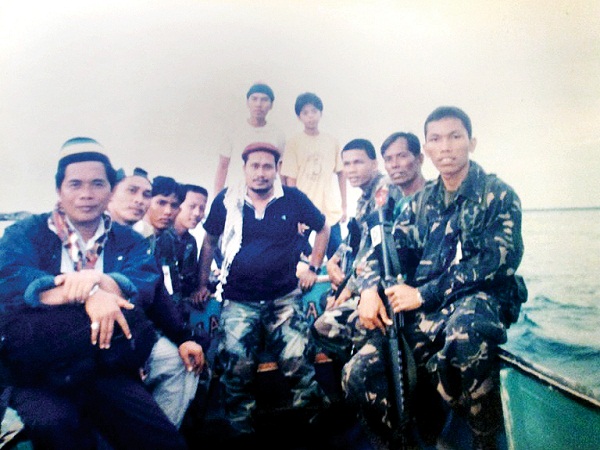
Early on Feb. 11, Rajah Mudah and about 1,000 of his followers, including armed men from what he called “Royal Security Forces of the Sultanate of Sulu and North Borneo” left Simunul Island in Tawi-Tawi in speedboats and headed for Sabah.
Rajah Mudah described his action as not an act of aggression but a journey back home.
“We came here in peace. We are not here to wage war. The armed men who are with me are the Royal Security Forces of the Sultanate of Sulu and North Borneo. We will never bring war to our own territory, much less to our own people,” Rajah Mudah said.
His group landed in the village of Tunduao in Lahad Datu town in Sabah.
Surrounded
What happened after the landing is unclear, but reports from Kuala Lumpur on Thursday said Malaysian security forces had surrounded the Filipinos, whom they believed were a faction of Muslim rebels unhappy with a peace deal with the administration of President Aquino.
Rajah Mudah said he and his group were not arrested. He said he was communicating with Gen. Zul Kipli, head of the Special Branch of Sabah, the equivalent of the top intelligence officer in the Philippines.
He admitted, however, that he and his group were surrounded by Malaysian police and special forces.
The standoff between the Malaysian authorities and Rajah Mudah’s group has sparked one of the biggest security scares in recent years in Sabah, which is less than an hour by speedboat from the southernmost Philippine province of Tawi-Tawi.
To ascertain facts
Malacañang was reluctant to meddle in the reported incursion into Sabah by “100 armed Filipinos” claiming to be descendants of the Sultan of Sulu.
Deputy presidential spokesperson Abigail Valte indicated in a briefing for reporters in the Palace yesterday that the government was not sure about what was going on in Sabah.
She said the Philippine Embassy in Kuala Lumpur had sent a police attaché to Sabah to ascertain “what’s really happening.”
Valte said the government would provide assistance “to any Filipino abroad,” but added that on the Sabah standoff, “we would like to ascertain the facts first.”
Unaware of the situation in Lahad Datu, Philippine officials said the Filipinos were unarmed civilians who had been promised land.
Citing information from Defense Secretary Voltaire Gazmin, Valte told reporters yesterday that the Filipinos were unarmed.
But Rajah Mudah’s claim that he was surrounded by his own security forces indicated the dearth of information in the government about the move taken by the heirs of the Sultan of Sulu.
Negotiations
In a statement released yesterday, the Department of Foreign Affairs said Malaysian Foreign Minister Anifa Aman had spoken to Foreign SecretaryAlbert del Rosario and assured him that the Malaysians would respect the rights of the Filipinos in the Sabah standoff.
The statement said the Malaysian government had resorted to “negotiations to encourage” the Filipinos “to leave peacefully.”
Both the Philippine military and the Malaysian military had established that the Filipinos’ activity in Sabah had no approval from the Philippine government, the DFA said.
“In this regard, we therefore urge these concerned individuals to return to their homes and families,” the DFA said.
Pretended consultation
Idjirani said that before the signing of the agreement, the Office of the Presidential Adviser on the Peace Process (Opapp) invited the heirs of the Sultan of Sulu to what was supposed to be a consultation on a peace deal with the MILF.
He said he was asked to give a lecture on the stand of the Sultanate of Sulu at a forum held at the University of the Philippines College of Law.
“We thought finally the government of President Aquino wanted a complete and comprehensive resolution management to the peace, security and economic problems of territories in Mindanao by consulting with us. But it was just talk,”
Idjirani said in English and Filipino.
“The framework agreement was finished without even the shadow of the Sultanate of Sulu and North Borneo. They just pretended to consult us,” he said.
He said the government encouraged the heirs of the Sultan of Sulu to lead “peace caravans” and they complied. He showed pictures of such a caravan taken in Tawi-Tawi last year. The pictures showed members of the Kiram royal family and their followers participating in the caravan.
Sultanate not mentioned
But the next thing the heirs knew, he said, the framework agreement had been signed without any mention of the “historic and sovereign rights” of the Sultanate of Sulu and North Borneo to territories included in the agreement.
“Until the government includes the Sultanate of Sulu and North Borneo, no lasting and significant peace will come to Mindanao,” Idjirani said.
“They should have seen that in the failure of the peace agreement with the Moro National Liberation Front of Nur Misuari,” he said.
“We thought the administration of President Aquino gave weight to ancestral and historic agreements. We were clearly wrong,” he added.
He said the sultanate’s “desire and intention” to be part of the peace process initiated by the government was expressed in a letter to former President Gloria Macapagal-Arroyo dated April 13, 2009.
In that letter signed by Sultan Jamalul Kiram III, he said, the government was acknowledged and referred to only as an ally in the sultanate’s ancestral and historic rights over the Sulu archipelago, which includes territories covered in the preliminary peace talks between the government and the MILF.
But Arroyo’s term ended in June 2010 with no agreement being reached with the MILF.
It was the Aquino administration that would clinch a preliminary peace deal with the MILF.
Heirs united
Idjirani said the signing of the framework agreement with the MILF led to the unification of the heirs of the Sultan of Sulu and their decision to proceed with claiming Sabah on their own.
Idjirani said the reported differences among the heirs were never personal but involved only policy and direction.
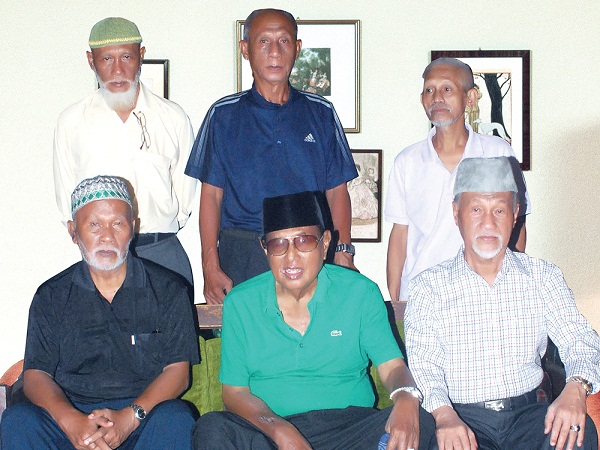
He said the direct descendants and heirs of the Sultan of Sulu and North Borneo were Sultan Jamalul Kiram III, Sultan Bantilan Esmail Kiram III, Datu Alianapia Kiram, Datu Phugdal Kiram, Datu Baduruddin Kiram and Rajah Mudah Agbimuddin Kiram, the crown prince who was tasked to lead the 1,000-strong civilian and military force to Sabah.
The “meeting of the minds” of the Kirams happened on Nov. 11 last year in a relative’s house, Idjirani said. It was during that meeting that Sultan Jamalul issued the royal decree that authorized Rajah Mudah’s journey to Sabah.
With reports from Michael Lim Ubac, Jerome Aning, AFP and The Star-Asia News Network
Saturday, February 16, 2013


PH calls for peaceful solution to Sabah stand-off | Inquirer Global Nation
PH calls for peaceful solution to Sabah stand-off | Inquirer Global Nation
Agence France-Presse, February 16th, 2013
LAHAD DATU, Malaysia—The Philippines on Saturday called for a peaceful resolution to a tense stand-off between Malaysian forces and a group of gunmen claiming to be followers of the heir of a former Borneo sultan.
The group, estimated at 200 with dozens believed to be armed, landed by boat near the Borneo town of Lahad Datu in Sabah from the neighboring southern Philippines on Tuesday.
Police say the group has declared itself followers of a former Mindanao-based Islamic sultanate that once controlled parts of Borneo, including the standoff site, and is refusing to leave Sabah.
President Benigno Aquino’s spokeswoman Abigail Valte said Saturday the safety of the Filipinos was the government’s main concern as Malaysian armed forces and police have locked down the area.
“The primary concern now is their safety and to resolve the incident peacefully,” Valte said in a radio interview in Manila.
She said the Philippines had received assurance from Malaysia that the government would encourage the group, which Manila has yet to identify, to leave the area peacefully.
Sabah police chief Hamza Taib was quoted by local dailies as saying police were in negotiations with the group and expected the stand-off to be resolved “very soon with the group returning to their home country.”
Malaysian police have set up a series of road blocks along the route leading from Lahad Datu through palm oil plantations to the remote village where the gunmen are. Marine police were also patrolling the sea.
An Agence France-Presse photographer was denied access some 20 kilometers (12 miles) from the stand-off site.
The group involved in the impasse has claimed to be adherents of the former Sulu sultanate, a regional power center until its demise a century ago.
A Philippine military official, who spoke on condition of anonymity, told AFP Friday the group was demanding an increase in the nominal amount Malaysia pays, under a long-standing agreement, to the heirs of the sultanate for possession of Sabah.
Much of the eastern part of Sabah is being claimed by the Philippines as part of the Sultanate of Sulu that was leased to the British North Borneo Company in 1878. However, Great Britain instead of returning Sabah to the sultanate transferred it to Malaysia in 1963.
Malaysia continues to pay “cession money” to the heirs of the sultan of Sulu. With INQUIRER.net
Agence France-Presse, February 16th, 2013
LAHAD DATU, Malaysia—The Philippines on Saturday called for a peaceful resolution to a tense stand-off between Malaysian forces and a group of gunmen claiming to be followers of the heir of a former Borneo sultan.
The group, estimated at 200 with dozens believed to be armed, landed by boat near the Borneo town of Lahad Datu in Sabah from the neighboring southern Philippines on Tuesday.
Police say the group has declared itself followers of a former Mindanao-based Islamic sultanate that once controlled parts of Borneo, including the standoff site, and is refusing to leave Sabah.
President Benigno Aquino’s spokeswoman Abigail Valte said Saturday the safety of the Filipinos was the government’s main concern as Malaysian armed forces and police have locked down the area.
“The primary concern now is their safety and to resolve the incident peacefully,” Valte said in a radio interview in Manila.
She said the Philippines had received assurance from Malaysia that the government would encourage the group, which Manila has yet to identify, to leave the area peacefully.
Sabah police chief Hamza Taib was quoted by local dailies as saying police were in negotiations with the group and expected the stand-off to be resolved “very soon with the group returning to their home country.”
Malaysian police have set up a series of road blocks along the route leading from Lahad Datu through palm oil plantations to the remote village where the gunmen are. Marine police were also patrolling the sea.
An Agence France-Presse photographer was denied access some 20 kilometers (12 miles) from the stand-off site.
The group involved in the impasse has claimed to be adherents of the former Sulu sultanate, a regional power center until its demise a century ago.
A Philippine military official, who spoke on condition of anonymity, told AFP Friday the group was demanding an increase in the nominal amount Malaysia pays, under a long-standing agreement, to the heirs of the sultanate for possession of Sabah.
Much of the eastern part of Sabah is being claimed by the Philippines as part of the Sultanate of Sulu that was leased to the British North Borneo Company in 1878. However, Great Britain instead of returning Sabah to the sultanate transferred it to Malaysia in 1963.
Malaysia continues to pay “cession money” to the heirs of the sultan of Sulu. With INQUIRER.net
Friday, February 15, 2013
Burma President hails national unity, avoiding autonomy status | Asia News – Politics, Media, Education | Asian Correspondent
Burma President hails national unity, avoiding autonomy status | Asia News – Politics, Media, Education | Asian Correspondent
Zin Linn, Feb 14, 2013

Zin Linn, Feb 14, 2013
President U Thein Sein received responsible persons of peace groups who attended the 66th Anniversary Union Day celebration on Wednesday at the meeting hall of 500-acre farmer educative mechanized farming model plantation in Naypyitaw, The New Lightof Myanmar said Thursday.
Apart from Union ministers, and deputy ministers, several unusual guests were also presented at the ceremony. Those unexpected participants from ethnic ceasefire groups were Pado Mahn Nyein Maung and Pado Thamein Tun of Karen National Union (KNU), Col Sai Hla and Col Sai Ngae of the Restoration Council of Shan State/Shan State Army (RCSS/SSA), U Sai Khun Sai and U Sai Naw Leik of Shan State Progress Party/ Shan State Army (SSPP/SSA), Maj-Gen Saw Yin Nu and Captain Saw Lah Do of Karen National Libration Army, Peace Council (KNU/ KNLA), U Khun Ti Hsaung and U Khun Zwe Hto of PaO National Liberation Organization (PNLO), U Naing Ta La Nyi and U Naing Kyi Hsan of New Mon State Party (NMSP), Dr Shwe Khar and U Pu Htan Zun of Chin National Front (CNF), Brig-Gen Saw Kyaw Thet and Col Saw Maung Lay of Democratic Karen Buddhist Army (DKBA), and U An Kann and Captain Aung Sai of National Socialist Council of Nagaland (NSCN-K), according to the state-media.
President Thein Sein delivered an address at the meeting with community-based social organizations at the hall of Yangon Region Government in Yangon on 20 January 2013, Sunday. (Photo: http://www.president-office.gov.mm/en)
During the meeting, President U Thein Sein made an address saying thanks to the audience representing Peace Groups at the Union Day party. President said he was very happy to be with blood-brothers who have not got together since scores of years ago.
He said that only roundtable reunion was the best way calling for ensuring forgiveness of conflicts, tolerance, sympathy and mutual respects since the entire national races have been living under the same roof. At this time, citizens started to have the benefit of the better outcomes of reconciliation, he added.
After all stakeholders think obligation of transforming the interim peace into a permanent peace, entire people would realize the value of peace. It was impractical to end regionalism and tribalism. But main concern should be placed on Union spirit to safeguard the country up to the future generations. National unity represents the national power, President said.
It was compulsory to end armed conflict at present and pass better heritage to next generation, he added.
To guarantee domestic peace, remarkable steps were being made to acquire common perceptive. Armistice accords had reached at the dialogue table for termination of over 60-year-old armed conflicts. Both sides saw fruitless results, suffering casualties and causing public worries. Those fatalities and victims were losses to the nation, he said. Thanks to roundtable negotiations, the nation had seen the light of peace.
President also hailed the meeting with KIA peacemaking team in Ruili on 4 February. The obligation was on every citizen to form the prospect of the homeland. All of us need cooperation to guarantee a lasting peace all the way through, he said.
He also called for reconstruction of damaged infrastructures while discussions on everlasting peace are being continued. President said that it was necessary to dig up land mines for public security. Rehabilitation tasks are to be put into practice with the assistances from home and abroad, he expressed.
According to some vigilant citizens, the President’s speech looks rhetoric since the citizens have been disappointed with his government’s over-spending defense budget during recent military offensive in Kachin State. While there were no medicine in public hospitals and no enough subsidies in favor of the paddy farmers during their farming time, government armed forces, as many as 100 battalions backing by airlifts and strikes, were launching greatest warfare upon blood-brothers Kachin resistance warriors for more than 17 months. It was appalling since the government had used not only heavy artillery but also enforced gunship-helicopters and jet-fighters in recent military operation against the ethnic Kachin rebels.
Many ethnic leaders have declared repeatedly that they don’t have faith in the military-drawn 2008 constitution. They believe it is a lopsided and oppressive constitution since the military takes 25 percent of all seats in the existing parliament. So, many analysts criticize the current charter will not grant the democratic freedom and the fundamental rights for the ethnic groups of the nation.
Even though the President mentioned national unity as national strength in his Wednesday speech, he did not bring to light the equal rights and self-determination of the ethnic people. In a few words, to launch a true political reform, President Thein Sein government ought to activate the 1947 Panglong Agreement which is maintained by the mainstream ethnic people.
Thursday, February 14, 2013
Philippines: Violence escalates in mine area, 2 govt militiamen killed | Asia News – Politics, Media, Education | Asian Correspondent
Philippines: Violence escalates in mine area, 2 govt militiamen killed | Asia News – Politics, Media, Education | Asian Correspondent
Edwin Espejo Feb 14, 2013
GENERAL SANTOS CITY – Two government militiamen were slain Tuesday, February 12, when a group of armed men harassed their outpost and later ambushed a convoy of soldiers bringing down the slain body of a Citizen Armed Force Geographical Unit (CAFGU) member from the remote village of Bong Mal in Kiblawan, Davao del Sur Tuesday, a spokesman of the Philippine Army’s 1002nd Brigade here said.
Capt. William Rodriguez identified the slain militiamen as Arnel Remotigue and Reynaldo Templa.
Remotigue was slain by sniper fire Tuesday morning that allegedly came from the group of fugitive anti-mining tribal leader Daguil Cafeon, 1002nd Brigade commander Col. Marcos Flores Jr later told a local TV station here.
A team of soldiers transporting the dead body of Remotigue headed by Task Force Kitaco (Kiblawan-Tampakan-Columbio) Capt. Joel Wayagwag was also ambushed near Sitio Nabul in the same day resulting into the death of Templa.
Col. Flores described the incident unfortunate even as the military is now conducting hot pursuit operations against the perpetrators of the twin killings.
The military has warned residents against aiding lawless armed groups in the area.
“The incidents are indications of the strong presence of lawless armed groups who may have the access to communities around the area as their safe havens,” Capt. Rodriguez said in a statement sent to the local media here.
The fresh violence came just two weeks after Kitari Cafeon was also killed in a military raid also in Kimlawis, a village in Kiblawan, Davao del Sur where the main base camp of Sagittarius Mines Inc. (SMI) is located.
Kitari is the younger brother of Daguil Cafeon, a Blaan tribal leader who took up arms to protest alleged encroachment of their ancestral lands by SMI.
In October last year, Daguil’s pregnant wife and their two sons were also killed in a military raid.
Also last week, residents in the violence-prone village, most of them women and elderly, held a dialogue with the military in General Santos in the presence of Marble Bishop Dinualdo Gutierrez.
They complained about the presence of the military in their community and said soldiers have been pointing the muzzles of their firearms against their women and children.
The bishop has repeatedly blamed the ongoing activities of SMI for the escalation of violence in quad-boundaries of Tampakan in South Cohabit, Kiblawan in Davao del Sur, Columbio in Sultan Kudarat and Malungon in Sarangani.
Col. Flores promised to look into their complaints but insisted that the military are there to protect villagers against lawless armed group, among them the Cafeon brothers.
He again aired his appeal for the armed group led by Cafeon to surrender and face the charges filed against them.
Cafeon and his band have admitted responsibility in killing of 3 drill contractors of SMI and at least 2 company guards during the last 2 years.
Cafeon, who often gives interviews to the local media here through mobile phone, has not issued any statement owning responsibility in the slaying of the two government militiamen.
Edwin Espejo Feb 14, 2013
GENERAL SANTOS CITY – Two government militiamen were slain Tuesday, February 12, when a group of armed men harassed their outpost and later ambushed a convoy of soldiers bringing down the slain body of a Citizen Armed Force Geographical Unit (CAFGU) member from the remote village of Bong Mal in Kiblawan, Davao del Sur Tuesday, a spokesman of the Philippine Army’s 1002nd Brigade here said.
Capt. William Rodriguez identified the slain militiamen as Arnel Remotigue and Reynaldo Templa.
Remotigue was slain by sniper fire Tuesday morning that allegedly came from the group of fugitive anti-mining tribal leader Daguil Cafeon, 1002nd Brigade commander Col. Marcos Flores Jr later told a local TV station here.
A team of soldiers transporting the dead body of Remotigue headed by Task Force Kitaco (Kiblawan-Tampakan-Columbio) Capt. Joel Wayagwag was also ambushed near Sitio Nabul in the same day resulting into the death of Templa.
Col. Flores described the incident unfortunate even as the military is now conducting hot pursuit operations against the perpetrators of the twin killings.
The military has warned residents against aiding lawless armed groups in the area.
“The incidents are indications of the strong presence of lawless armed groups who may have the access to communities around the area as their safe havens,” Capt. Rodriguez said in a statement sent to the local media here.
The fresh violence came just two weeks after Kitari Cafeon was also killed in a military raid also in Kimlawis, a village in Kiblawan, Davao del Sur where the main base camp of Sagittarius Mines Inc. (SMI) is located.
Kitari is the younger brother of Daguil Cafeon, a Blaan tribal leader who took up arms to protest alleged encroachment of their ancestral lands by SMI.
In October last year, Daguil’s pregnant wife and their two sons were also killed in a military raid.
Also last week, residents in the violence-prone village, most of them women and elderly, held a dialogue with the military in General Santos in the presence of Marble Bishop Dinualdo Gutierrez.
They complained about the presence of the military in their community and said soldiers have been pointing the muzzles of their firearms against their women and children.
The bishop has repeatedly blamed the ongoing activities of SMI for the escalation of violence in quad-boundaries of Tampakan in South Cohabit, Kiblawan in Davao del Sur, Columbio in Sultan Kudarat and Malungon in Sarangani.
Col. Flores promised to look into their complaints but insisted that the military are there to protect villagers against lawless armed group, among them the Cafeon brothers.
He again aired his appeal for the armed group led by Cafeon to surrender and face the charges filed against them.
Cafeon and his band have admitted responsibility in killing of 3 drill contractors of SMI and at least 2 company guards during the last 2 years.
Cafeon, who often gives interviews to the local media here through mobile phone, has not issued any statement owning responsibility in the slaying of the two government militiamen.
Thursday, February 7, 2013
Funding Woes Spell More Trouble for Thai Rice Scheme | The Irrawaddy Magazine
Funding Woes Spell More Trouble for Thai Rice Scheme | The Irrawaddy Magazine
APORNRATH PHOONPHONGPHIPHAT / REUTERS WRITER, February 7, 2013
BANGKOK — Thailand’s generous rice subsidy scheme has hit funding problems, marking a new threat to a policy that wins millions of rural votes for the government, but which has generated huge stockpiles, sparked graft allegations and unnerved markets.
Prime Minister Yingluck Shinawatra came into power in 2011 on a promise to pay farmers way above what was then the market rate for their rice, and the intervention has gone on even though it has priced Thai rice out of the international market.
The policy has knocked Thailand off its perch as the world’s top rice exporter and built up stockpiles of around 17 million tonnes of milled rice, or nearly twice what it exports normally, leaving authorities struggling to find warehouse space, and the threat of rice being dumped on the world market at a loss.
Now officials and bankers say the government has paid less than a sixth of what it owes a state bank funding the intervention program, piling more pressure on the scheme.
“We have informed the government and we expect the cabinet to make a decision to do something very quickly, otherwise there could be a major problem,” Bank of Agriculture and Agricultural Cooperatives vice-president Supat Eauchai told Reuters.
Payments to the bank, which buys rice from farmers and is meant to be refunded by the Commerce Ministry, slowed after allegations in parliament of corruption in the scheme, but the ministry has also failed to sell enough rice to secure funds.
Only around 60 billion baht (US $2 billion) has been paid to the bank, said Thikumporn Nartworathus, deputy director of the foreign trade department of the Commerce Ministry. He blamed the delay on checks needed to make sure the money had been spent properly.
“The repayment was delayed because we needed to waste time investigating the transparency of the scheme after it was mentioned in the censure debate in November,” Thikumporn said.
Bank of Agriculture’s Supat said that 336 billion baht ($11.3 billion) had been spent in the first year of the scheme to last September, plus another 125 billion baht after it was renewed for the crop year from October 2012.
Supat said the bank had asked the Finance Ministry to guarantee an additional 70 billion baht to fund the scheme.
A senior bank official, who asked not to be named, said the bank needed around 200 billion baht from the Commerce Ministry to ensure the smooth running of the scheme.
Other officials at the bank and Finance Ministry, who asked not to be identified because they were not authorized to speak to the media, confirmed the bank had got back only around a third of that total.
The scheme has been panned by academics, economists, the International Monetary Fund and the opposition, but it has wide support in rural areas and has done nothing to dent Yingluck’s high opinion poll rating.
But problems have already appeared in the countryside: farmers in several provinces have said they were unable to get immediate payment when they sold rice to the government.
“Some farmers had to wait a few months to get their money. We hope this won’t happen again in late February, when supply from the latest crop will peak,” said Prasit Boonchoey, president of the Thai Farmers Association.
With space running out, Thai rice exporters said last week it was only a matter of time before the government was forced to sell grain from its stocks.
It will almost certainly have to sell at a big loss, which will ultimately be covered by the taxpayer.
That will add to huge sums needed for flood defense plans, prepared after disastrous floods in 2011 and still far from complete, and ambitious infrastructure projects, though the government has had no problems funding its budget deficit in the domestic bond market.
Commerce Minister Boonsong Teriyapirom has said repeatedly that Thailand had sold 7.3 million tonnes of rice to foreign governments and that his ministry would gradually repay money owed to the Bank of Agriculture by the end of 2013.
However, industry officials have said activity at ports did not suggest large volumes had been shipped, while Indonesia and the Philippines, named by Boonsong as buyers, denied any deals.
The minister has been vague about export schedules and his ministry has stopped publishing trade data for rice. It has refused to say what price it got for the rice.
The government is committed to paying farmers 15,000 baht a tonne for their rice. That has pushed benchmark Thai export prices up to about $570 a tonne, around $170 higher than grain from main rivals India and Vietnam.
APORNRATH PHOONPHONGPHIPHAT / REUTERS WRITER, February 7, 2013
BANGKOK — Thailand’s generous rice subsidy scheme has hit funding problems, marking a new threat to a policy that wins millions of rural votes for the government, but which has generated huge stockpiles, sparked graft allegations and unnerved markets.
Prime Minister Yingluck Shinawatra came into power in 2011 on a promise to pay farmers way above what was then the market rate for their rice, and the intervention has gone on even though it has priced Thai rice out of the international market.
The policy has knocked Thailand off its perch as the world’s top rice exporter and built up stockpiles of around 17 million tonnes of milled rice, or nearly twice what it exports normally, leaving authorities struggling to find warehouse space, and the threat of rice being dumped on the world market at a loss.
Now officials and bankers say the government has paid less than a sixth of what it owes a state bank funding the intervention program, piling more pressure on the scheme.
“We have informed the government and we expect the cabinet to make a decision to do something very quickly, otherwise there could be a major problem,” Bank of Agriculture and Agricultural Cooperatives vice-president Supat Eauchai told Reuters.
Payments to the bank, which buys rice from farmers and is meant to be refunded by the Commerce Ministry, slowed after allegations in parliament of corruption in the scheme, but the ministry has also failed to sell enough rice to secure funds.
Only around 60 billion baht (US $2 billion) has been paid to the bank, said Thikumporn Nartworathus, deputy director of the foreign trade department of the Commerce Ministry. He blamed the delay on checks needed to make sure the money had been spent properly.
“The repayment was delayed because we needed to waste time investigating the transparency of the scheme after it was mentioned in the censure debate in November,” Thikumporn said.
Bank of Agriculture’s Supat said that 336 billion baht ($11.3 billion) had been spent in the first year of the scheme to last September, plus another 125 billion baht after it was renewed for the crop year from October 2012.
Supat said the bank had asked the Finance Ministry to guarantee an additional 70 billion baht to fund the scheme.
A senior bank official, who asked not to be named, said the bank needed around 200 billion baht from the Commerce Ministry to ensure the smooth running of the scheme.
Other officials at the bank and Finance Ministry, who asked not to be identified because they were not authorized to speak to the media, confirmed the bank had got back only around a third of that total.
The scheme has been panned by academics, economists, the International Monetary Fund and the opposition, but it has wide support in rural areas and has done nothing to dent Yingluck’s high opinion poll rating.
But problems have already appeared in the countryside: farmers in several provinces have said they were unable to get immediate payment when they sold rice to the government.
“Some farmers had to wait a few months to get their money. We hope this won’t happen again in late February, when supply from the latest crop will peak,” said Prasit Boonchoey, president of the Thai Farmers Association.
With space running out, Thai rice exporters said last week it was only a matter of time before the government was forced to sell grain from its stocks.
It will almost certainly have to sell at a big loss, which will ultimately be covered by the taxpayer.
That will add to huge sums needed for flood defense plans, prepared after disastrous floods in 2011 and still far from complete, and ambitious infrastructure projects, though the government has had no problems funding its budget deficit in the domestic bond market.
Commerce Minister Boonsong Teriyapirom has said repeatedly that Thailand had sold 7.3 million tonnes of rice to foreign governments and that his ministry would gradually repay money owed to the Bank of Agriculture by the end of 2013.
However, industry officials have said activity at ports did not suggest large volumes had been shipped, while Indonesia and the Philippines, named by Boonsong as buyers, denied any deals.
The minister has been vague about export schedules and his ministry has stopped publishing trade data for rice. It has refused to say what price it got for the rice.
The government is committed to paying farmers 15,000 baht a tonne for their rice. That has pushed benchmark Thai export prices up to about $570 a tonne, around $170 higher than grain from main rivals India and Vietnam.
Wednesday, February 6, 2013
Thailand's Lese Majeste Erodes the Judiciary | Asia Sentinel
Thailand's Lese Majeste Erodes the Judiciary | Asia Sentinel
Kevin Hewison, 06 February 2013
Those 'protecting' the monarchy, are undermining the legal system
Thailand's repeated use of its draconian lese majeste and computer crimes laws to "protect" its monarchy is also causing serious damage to its judicial system.
Since late December, Thai courts have sentenced three more people to jail terms under Article 112 of the Criminal Code (the lese majeste law) and the closely related Computer Crimes Act. All were identified as opponents of the previous government led by Abhisit Vejjajiva and the Democrat Party. Seventeen others are known to have been sentenced under these laws since the 2006 military coup. This sentencing has been ferocious, with some receiving 15 and 20 years. Almost all of those convicted were identified as opponents of the coup and military-backed governments.
Before the coup that overthrew Prime Minister Thaksin Shinawatra, the lese majeste law was used relatively infrequently. Spikes in its use have coincided with the right-wing and military governments that litter Thailand's political history.
The period of political conflict associated with the Abhisit government, from late 2008 to mid-2011, saw the lese majeste law used to gag a vociferous Red Shirt opposition media and political movement. The Abhisit government repeatedly proclaimed that its censorship and jailing of political opponents was to prevent republicans bringing down the monarchy. It produced little evidence but the jails were filled with political prisoners.
While the Yingluck Shinawatra government, elected in mid-2011, has reduced the use of this politicized law, cases continue to drag through the courts, with the government's royalist opponents having declared lese majeste reform an attack on the monarchy itself.
Many royalists assert that Article 112 is the foundation of protection for the monarchy and, indeed, for the Thai state itself. This conviction blinds them to the fact that the use of this draconian law and the continuing trials are undermining another institution that is vital for the state: the judiciary.
Historically, while the judiciary has been politically supine, it has not been identified as a politically activist institution. However, that changed when the king intervened following an election shambles in April 2006 to urge the judiciary to sort out the political mess. That mess revolved around royalist agitation for Thaksin's elected government to be thrown out. To be sure, the king had long taken an interest in the judiciary, yet this was a call for a judicial political intervention. Since the military coup, the king has repeatedly urged the judiciary to remain activist.
In the period following the coup, the judiciary was first used to target Thaksin, his family and his parties with myriad legal cases. But it is lese majeste that has become defining for the courts. In order to "protect" the monarchy, and the system of political and economic power associated with it, the judiciary has responded with considerable gusto. Increasingly, though, foreign observers and Thai academics and activists are expressing concern at the bizarre legal calisthenics demonstrated by the courts.
Article 112 declares that anyone who defames, insults or threatens the king, the queen, the crown prince or the regent may be jailed. In two recent cases, one activist was convicted not for what he said at a demonstration, but for what the court decided he really wanted to say before he censored himself by throwing his hand across his mouth.
Another journalist and activist was convicted for publishing a critical account of politics that the court interpreted as being about the king, even though he was not mentioned by the author. The author himself has never been charged even though he is known.
In an earlier case, a sickly old man was sentenced to 20 years for sending allegedly threatening phone messages about the queen. While the prosecution could not prove the accused sent these messages, neither could the accused prove he didn't send them. He was convicted and died in prison.
The list of curious convictions is long. The web master of a popular web board was convicted for not removing allegedly insulting posts "quickly enough" in amongst thousands of posts. An American citizen of Thai ethnicity was convicted for posting Thai translations of an academic book about the king on the web. This was a legal activity in Colorado, but when the man was visiting Thailand, he was jailed.
Decisions that seem to mock the legal process and practice and rules of evidence are damaging for the judiciary. Perhaps most damaging, however, has been the Constitutional Court's decisions when Article 112 has been challenged. These interpretations have been virtually inexplicable in legal terms.
In one case, when a lese majeste trial was conducted in a closed court, clearly in contravention of constitutional guarantees on the right to a public trial, the Constitutional Court managed to conjure a reading that made a closed court legal. When others challenged the law, claiming that it contradicted provisions of freedom of the media and of expression, the same court ruled that protecting the monarchy and the existing system of government overrode these constitutional rights.
Article 112 rides roughshod over other basic rights. Bail is regularly refused for those charged with lese majeste, giving the impression that the defendants are considered guilty before they are convicted. That lese majeste detainees are usually shackled, chained and sometimes caged is further evidence for this conclusion. When lese majeste judgments are criticized, court officials threaten legal action.
In short, Article 112 of the criminal code is allocated a legal position that relegates the nation's basic law to a residual status. When the courts make unashamedly politicized decisions in lese majeste cases, the foundations of the rule of law are undermined. When there is no equality before the law and arbitrary judgments are made, then the legitimacy of the judiciary is called into question. Thailand's judges, by elevating Article 112 above all other laws, are threatening the future of the country's democracy.
(Kevin Hewison is Weldon E. Thornton Distinguished Professor in Asian Studies at the University of North Carolina at Chapel Hill)
Kevin Hewison, 06 February 2013
Those 'protecting' the monarchy, are undermining the legal system
Thailand's repeated use of its draconian lese majeste and computer crimes laws to "protect" its monarchy is also causing serious damage to its judicial system.
Since late December, Thai courts have sentenced three more people to jail terms under Article 112 of the Criminal Code (the lese majeste law) and the closely related Computer Crimes Act. All were identified as opponents of the previous government led by Abhisit Vejjajiva and the Democrat Party. Seventeen others are known to have been sentenced under these laws since the 2006 military coup. This sentencing has been ferocious, with some receiving 15 and 20 years. Almost all of those convicted were identified as opponents of the coup and military-backed governments.
Before the coup that overthrew Prime Minister Thaksin Shinawatra, the lese majeste law was used relatively infrequently. Spikes in its use have coincided with the right-wing and military governments that litter Thailand's political history.
The period of political conflict associated with the Abhisit government, from late 2008 to mid-2011, saw the lese majeste law used to gag a vociferous Red Shirt opposition media and political movement. The Abhisit government repeatedly proclaimed that its censorship and jailing of political opponents was to prevent republicans bringing down the monarchy. It produced little evidence but the jails were filled with political prisoners.
While the Yingluck Shinawatra government, elected in mid-2011, has reduced the use of this politicized law, cases continue to drag through the courts, with the government's royalist opponents having declared lese majeste reform an attack on the monarchy itself.
Many royalists assert that Article 112 is the foundation of protection for the monarchy and, indeed, for the Thai state itself. This conviction blinds them to the fact that the use of this draconian law and the continuing trials are undermining another institution that is vital for the state: the judiciary.
Historically, while the judiciary has been politically supine, it has not been identified as a politically activist institution. However, that changed when the king intervened following an election shambles in April 2006 to urge the judiciary to sort out the political mess. That mess revolved around royalist agitation for Thaksin's elected government to be thrown out. To be sure, the king had long taken an interest in the judiciary, yet this was a call for a judicial political intervention. Since the military coup, the king has repeatedly urged the judiciary to remain activist.
In the period following the coup, the judiciary was first used to target Thaksin, his family and his parties with myriad legal cases. But it is lese majeste that has become defining for the courts. In order to "protect" the monarchy, and the system of political and economic power associated with it, the judiciary has responded with considerable gusto. Increasingly, though, foreign observers and Thai academics and activists are expressing concern at the bizarre legal calisthenics demonstrated by the courts.
Article 112 declares that anyone who defames, insults or threatens the king, the queen, the crown prince or the regent may be jailed. In two recent cases, one activist was convicted not for what he said at a demonstration, but for what the court decided he really wanted to say before he censored himself by throwing his hand across his mouth.
Another journalist and activist was convicted for publishing a critical account of politics that the court interpreted as being about the king, even though he was not mentioned by the author. The author himself has never been charged even though he is known.
In an earlier case, a sickly old man was sentenced to 20 years for sending allegedly threatening phone messages about the queen. While the prosecution could not prove the accused sent these messages, neither could the accused prove he didn't send them. He was convicted and died in prison.
The list of curious convictions is long. The web master of a popular web board was convicted for not removing allegedly insulting posts "quickly enough" in amongst thousands of posts. An American citizen of Thai ethnicity was convicted for posting Thai translations of an academic book about the king on the web. This was a legal activity in Colorado, but when the man was visiting Thailand, he was jailed.
Decisions that seem to mock the legal process and practice and rules of evidence are damaging for the judiciary. Perhaps most damaging, however, has been the Constitutional Court's decisions when Article 112 has been challenged. These interpretations have been virtually inexplicable in legal terms.
In one case, when a lese majeste trial was conducted in a closed court, clearly in contravention of constitutional guarantees on the right to a public trial, the Constitutional Court managed to conjure a reading that made a closed court legal. When others challenged the law, claiming that it contradicted provisions of freedom of the media and of expression, the same court ruled that protecting the monarchy and the existing system of government overrode these constitutional rights.
Article 112 rides roughshod over other basic rights. Bail is regularly refused for those charged with lese majeste, giving the impression that the defendants are considered guilty before they are convicted. That lese majeste detainees are usually shackled, chained and sometimes caged is further evidence for this conclusion. When lese majeste judgments are criticized, court officials threaten legal action.
In short, Article 112 of the criminal code is allocated a legal position that relegates the nation's basic law to a residual status. When the courts make unashamedly politicized decisions in lese majeste cases, the foundations of the rule of law are undermined. When there is no equality before the law and arbitrary judgments are made, then the legitimacy of the judiciary is called into question. Thailand's judges, by elevating Article 112 above all other laws, are threatening the future of the country's democracy.
(Kevin Hewison is Weldon E. Thornton Distinguished Professor in Asian Studies at the University of North Carolina at Chapel Hill)
Monday, February 4, 2013
Burma resumes peace talks with KIO in China, along with charter row | Asia News – Politics, Media, Education | Asian Correspondent
Burma resumes peace talks with KIO in China, along with charter row | Asia News – Politics, Media, Education | Asian Correspondent
Zin Linn Feb 04, 2013
The Government of Myanmar (Burma) has welcomed peace gesture proposed in the statement issued by KIO’s Central Committee on February 1, 2013, as per Press Release (6/2013) of its Information Team via the state-run newspapers on 2 February.
Zin Linn Feb 04, 2013
The Government of Myanmar (Burma) has welcomed peace gesture proposed in the statement issued by KIO’s Central Committee on February 1, 2013, as per Press Release (6/2013) of its Information Team via the state-run newspapers on 2 February.
GOM said that it has believed the legitimate peace desired by all people can be achieved only through political dialogue. The Government welcomes peace efforts assisted by ethnic ceasefire groups and other organizations in an attempt to support the Union Peace Working Committee and KIO/KIA to resume peace talks and put an end to armed conflicts, according to the press release.
According to the 7Days News Journal, government peacemaking team and ethnic KIO peace delegation will hold talks in the Chinese border town of Ruili in China on 4 February (Monday), after severe fighting in the Kachin State of Burma nearly 18 months.
Officials say the talks will begin Monday in the Chinese border town of Ruili. The meeting comes after the army seized several strategic guerrilla-held hilltops this month in the hills around Laiza, which serves as a headquarters for the rebel movement, AP News said Sunday.
On 11 January 2013, the Lower House of Burma (Myanmar) made a request to Union Peacemaking Central Committee and KIO/KIA at the second day sixth regular session of the First People’s Parliament. The call made by the Lower House to Union Peace-making Central Committee and KIO/KIA says the members of parliament have felt sadness for local people of Kachin state who have been suffering the consequences of the ongoing war. The fighting caused loss of both sides due to daily armed conflicts in Kachin state, it says.
The request keeps on saying that there have been difficulties to hold talks between the members of peace-making team of the government and representatives of KIO/KIA as military action swelling in the region continuously. The request letter says to ease the military tensions in favor of the people’s voices while building trust through the negotiation. Hence, it would pave the way for the lasting peace, says the request letter signed by the Lower House Speaker Thura Shwe Mann.
The key point of disagreement between the KIO and the military-backed government is the attitude with the 1947 Panglong Agreement. KIO has declared that it will talk through the ethnic alliance, the United Nationalities Federal Council (UNFC), keeping on the spirit of the Panglong Agreement.
On the contrary, the military-backed government made its negative response of peace talks based on the principles of the 1947 Panglong Treaty advised by the Kachin Independence Organization (KIO). The government sticks to the 2008 controversial constitution as the guideline for the peace talks.
The landmark Panglong Agreement mainly guaranteed self-determination of the ethnic minorities and offered a large measure of autonomy, including independent legislature, judiciary and administrative powers. However, the dream of equality and a federal union is far from being realized some six decades after signing the Panglong Agreement.
The new constitution, approved in a May 2008 referendum, is inundated with misleading principles. It says the country must be united under one military command. To bring the ethnic groups in line with this proviso, the military regime has ordered all armed rebel groups to become part of Burma’s border guard force ahead of the 2010 election.
Ethnic minorities have been suffering through five decades of immoral military operations in the name of national unity. Attacks on these rural civilians continue on a daily basis. There is a constant demand from Burma’s ethnic groups to enjoy equal political, social and economic rights. The Constitution must guarantee the rights of self-determination and of equal representation for every ethnic group in the Parliament. It must also include provisions against racial discrimination.
During the June-2004 National Convention sponsored by the previous junta, 13 ceasefire groups put forward a political offer demanding equal access to the plenary session. But the convention’s convening committee dismissed the proposal as improper. When the 2008 Constitution came out, none of the political points proposed by the ethnic representatives were included.
On this political issue, there is a big gap between the military junta and the NLD led by Aung San Suu Kyi. To the military autocrats, allowing the ethnic minorities to enjoy equal political, social and economic rights is a risk towards a collapse of sovereignty.
To the NLD and ethnic alliance parties, granting equal rights to ethnic minorities will certainly guarantee peace, stability and prosperity of the country. Actually, the military-backed government leaders strongly support the unitary state instead of a federal union state. On the other hand, the NLD and ethnic leaders continuously demand in favor of a democratic federal union state.
At the first Union Parliament second regular session on 22 August 2011, President Thein Sein said, “We know what happen to people and what people want. And we are striving our best to fulfill their needs to the full extent. To conclude my speech, I promise that our government as a democratically-elected government will do our best for the interests of the people.”
If the president really knows what people want, he should think about amending of the controversial constitution in which none of the political aspirations suggested by the ethnic representatives was integrated.
If the existing government truthfully committed to start political reforms, the first thing it should bear in mind is providing access to debate on constitutional flaws in the parliament.
Without a debate on the 2008 Constitution by all stakeholders, Burma will not rise above its political fiasco including the Kachin conflict.
Subscribe to:
Posts (Atom)


 Posts
Posts